
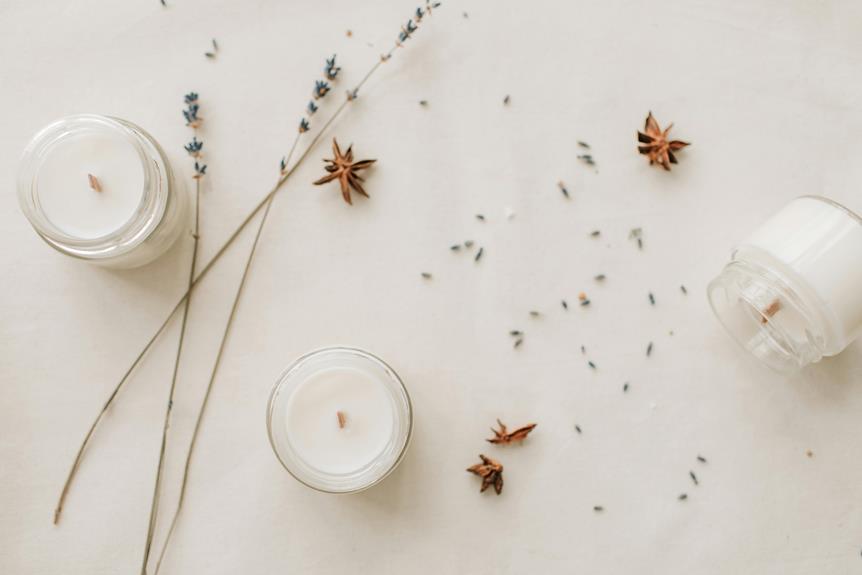
You're about to take your beeswax candles to the next level by adding coconut oil and essential oils. Start by choosing the right essential oils that complement the natural scent of beeswax, like citrus or floral notes. Prepare your beeswax by grating and melting it, then add coconut oil to enhance burn time and stability. Infuse essential oils into the melted wax, adjusting the ratio to your liking. Blend oils to create unique scents and follow safety precautions to avoid irritation and hazards. Now, get ready to tap into the full potential of your candles and discover the perfect blend that suits your style.
Key Takeaways
- Grate or shred beeswax to increase surface area for oil penetration and melt it in a double boiler or dedicated candle-making pot.
- Mix coconut oil with beeswax to enhance burn time and stability, using a ratio of 10-20% coconut oil to 80-90% beeswax.
- Add 5-10% essential oil to melted wax, adjusting the ratio based on scent strength preference, and stir well to confirm oil incorporation.
- Choose essential oils that complement the natural scent of beeswax, selecting mild to moderate strength oils to avoid overpowering the wax.
- Blend essential oils to create unique scents, starting with a base note, adding middle notes, and finishing with top notes for a complex aroma.
Choosing the Right Oils
When making beeswax candles, you'll want to select essential oils that not only provide a pleasant aroma but also complement the natural, honey-like scent of the wax.
You don't want the oil to overpower the wax, so choose oils with a mild to moderate strength.
Citrus-based oils like lemon, orange, and grapefruit work well, as they're uplifting and invigorating without being overwhelming.
Floral oils like lavender and geranium are also popular choices, as they add a subtle, soothing quality to the candle.
If you prefer stronger scents, you can opt for spicy oils like cinnamon or clove, but use them sparingly to avoid overwhelming the wax.
Preparing Beeswax for Oil Infusion
You've selected your ideal essential oils, now it's time to prepare your beeswax for infusion.
Before you can add your chosen oils, you need to make certain your beeswax is ready to accept them. Start by grating or shredding your beeswax into small pieces. This will increase the surface area, allowing the oils to penetrate more evenly.
Next, melt the grated beeswax in a double boiler or a dedicated candle-making pot. Keep the heat low to prevent overheating, which can affect the quality of your wax. Stir occasionally until the wax reaches a temperature between 160°F and 180°F (71°C to 82°C).
This is the ideal range for oil infusion. Remove the melted wax from the heat and let it cool slightly. It's crucial to work within this temperature range to guarantee the oils bind properly with the wax.
Now that your beeswax is prepared, you're ready to move on to the next step: infusing your wax with the vital oils of your choice.
Adding Coconut Oil to Beeswax
Mixing coconut oil with your prepared beeswax enhances the burn time and stability of your candle, while also adding a unique set of benefits to the final product.
When you combine the two, you'll notice the coconut oil helps to soften the beeswax, making it easier to pour into your mold. This blend also increases the melting point of your candle, resulting in a longer and more consistent burn.
Additionally, coconut oil is a natural moisturizer, so it can help to create a softer, more pleasant glow.
When adding coconut oil to your beeswax, a crucial step is to use the right ratio.
A general rule of thumb is to use 10-20% coconut oil to 80-90% beeswax. This will guarantee your candle maintains its structure and stability while still reaping the benefits of the coconut oil.
You can adjust this ratio to suit your personal preferences, but be careful not to add too much coconut oil, as it can affect the candle's overall quality.
With the right balance, you'll be able to create a high-quality, long-burning candle that's perfect for any occasion.
Infusing Essential Oils Into Beeswax
To take your beeswax candle to the next level, try infusing it with essential oils, which can add a unique, invigorating aroma to the ambiance of any room. You'll want to choose high-quality, pure essential oils that are suitable for candle-making. Lavender, eucalyptus, and peppermint are popular options, but you can experiment with different scents to find your favorite.
When infusing essential oils into your beeswax candle, it's vital to use the right amount. A general rule of thumb is to add 5-10% essential oil to your melted wax. You can adjust this ratio based on your personal preference for scent strength. Make sure to stir well to confirm the oil is fully incorporated into the wax.
As you pour the wax mixture into your candle mold, the essential oil will distribute evenly throughout the candle. When lit, the heat will release the fragrance, filling the air with a pleasant aroma. With essential oils, you can create unique, complex scents that will set your beeswax candles apart from others.
Blending Oils for Unique Scents
One way to tap into a world of possibilities is by blending essential oils to create unique, signature scents for your beeswax candles.
You can experiment with different combinations to craft scents that evoke emotions, stimulate memories, or simply enhance your mood. For instance, you might blend calming lavender with uplifting bergamot to create a soothing yet invigorating aroma. Alternatively, you could combine earthy patchouli with sweet vanilla to evoke feelings of warmth and comfort.
When blending oils, start with a base note, such as sandalwood or cedarwood, which provides depth and longevity to the scent.
Then, add middle notes like geranium or lemongrass to add complexity and character.
Finally, top notes like citrus or mint can add a bright, uplifting quality to the blend.
Remember, the key to successful blending is to experiment and adjust the ratios of each oil until you achieve the desired scent.
Don't be afraid to try new combinations and take notes on what works and what doesn't.
With practice, you'll develop your own signature scents that will set your beeswax candles apart from the rest.
Safety Precautions and Tips
As you experiment with blending essential oils and pouring beeswax candles, it's vital you take certain precautions to guarantee a safe and enjoyable creative process.
You'll want to secure good ventilation in your workspace, as some essential oils can be overpowering and even irritating to your respiratory system. Wear protective gear like gloves and goggles to prevent skin and eye irritation from hot wax splatters or spilled oils.
Keep your workspace clean and clear of clutter to avoid tripping hazards and fires. When handling hot equipment, use a thermometer to monitor temperatures and avoid overheating. Always follow the manufacturer's instructions for melting points and usage guidelines for your specific wax and oils.
It's also important to test your essential oil blends in small batches before scaling up to confirm they don't cause the wax to become too soft or separated. Keep your candles away from open flames, sparks, or hot surfaces.
Frequently Asked Questions
Can I Use Expired or Old Essential Oils in My Beeswax Candles?
You're wondering if you can use expired or old essential oils in your project. Generally, it's not recommended to use expired oils as they may lose potency and aroma, affecting the candle's quality and your customer's experience.
How Do I Prevent Oil Separation in My Beeswax Candles?
When you're in a pickle trying to prevent oil separation in your candles, you'll want to guarantee a consistent temperature during melting, and then carefully monitor the cooling process to prevent layering.
Are Beeswax Candles With Oils Suitable for Outdoor Use?
You wonder if candles with oils can withstand the outdoors. Generally, it's not recommended as weather conditions can cause the wax to soften or the oils to evaporate, affecting the candle's performance and stability.
Can I Add Colorants to My Beeswax Candles With Oils?
"Sweet success is within reach! You're wondering if colorants can join the party in your beeswax candles. The short answer is yes, but choose your colorants wisely, as some may affect the burn quality or beeswax's natural charm."
Do Beeswax Candles With Oils Have a Shorter Shelf Life?
You're wondering if beeswax candles have a shorter shelf life, and the answer is yes, they typically do. Beeswax is a natural, porous material that can absorb moisture, causing it to degrade over time.
Conclusion
As you master the art of infusing beeswax candles with coconut and essential oils, your creations will be the talk of the town, like a sweet serenade that fills the air.
With the right blend, you'll be the conductor of a sensory experience, orchestrating a harmonious balance of scent and ambiance.
So, go ahead, experiment, and let your imagination run wild – your candles will be the perfect symphony of fragrance and light.